

Website cloning is becoming more common, and more convincing.
Cyber criminals can create highly convincing copies of legitimate websites and use them to steal credentials, distribute malware, or impersonate trusted organisations. If your website has been cloned, acting quickly can significantly reduce the impact on your customers and your reputation.
This guide explains what website cloning is, how to recognise it, what actions you should take immediately, and how Websure supports clients through the investigation and response process.
What is a cloned website?
A cloned website is an unauthorised copy of your website hosted on a different domain. Its purpose is usually to deceive visitors into believing they are interacting with your genuine business.
Modern tools make it possible for attackers to reproduce much of a public website automatically. In some cases, a convincing copy can be created within hours.
The objective is typically one or more of the following:
- Capture usernames and passwords through fake login forms.
- Trick visitors into downloading malicious files.
- Support phishing campaigns that impersonate your organisation.
- Damage your reputation by associating your brand with fraudulent activity.
The domain often looks very similar to the genuine one. It may use an extra word, substitute characters such as “0” for “O”, or use a different top-level domain in the hope that users will not notice.
Importantly, a cloned website does not normally affect the availability of your legitimate website. Your own site may continue to operate perfectly while the fraudulent copy targets your customers elsewhere.
How can you tell if your website has been cloned?
Many incidents are first identified by employees, customers, or partners rather than automated monitoring.
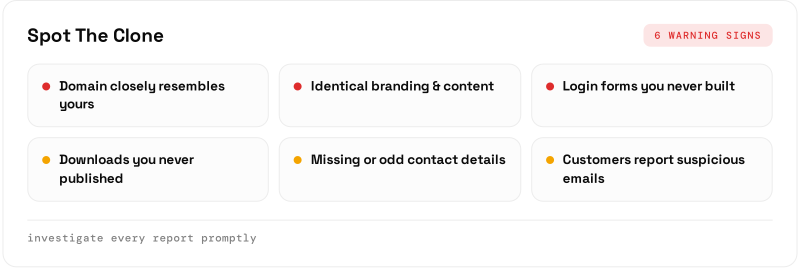
Warning signs include:
- A domain name that closely resembles your own.
- A website with identical branding, imagery, or content.
- Login pages or forms that do not exist on your genuine website.
- Downloads or links that you have never published.
- Missing company information or inconsistent contact details.
- Reports from customers about suspicious emails or unusual links.
Any report of a possible cloned website should be investigated promptly. Even if it proves to be harmless, it is better to verify the facts early than ignore a genuine threat.
What should you do immediately?
What to do next
1. Contact your web partner
Notify your technical team or email Websure at support@websure.digital as soon as possible. Include:
- The URL of the suspected website.
- Screenshots where available.
- How the issue was discovered.
- Any information about affected users.
2. Avoid interacting with the cloned website
Do not attempt to log in, submit information, download files, or contact whoever is operating the site. Unnecessary interaction may expose you to additional risk or complicate later investigations.
3. Assess whether customers may have been affected
If there is a reasonable possibility that users have visited the cloned website or received phishing emails directing them there, prepare clear communications advising them how to protect themselves.
4. Seek legal advice where appropriate
Where intellectual property infringement, fraud, or impersonation is involved, legal representatives can often assist with takedown requests and enforcement. Technical evidence gathered during the investigation can support that process.
How Websure responds
Our incident response follows four structured phases.
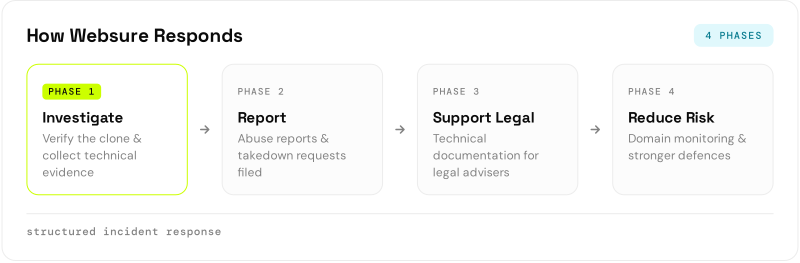
Phase 1: Investigation and evidence collection
We verify the existence of the cloned website and document the technical environment surrounding it.
Depending on what information is publicly available, this may include:
- Domain registration details.
- Hosting provider identification.
- IP address analysis.
- SSL certificate inspection.
- CDN and proxy detection.
- Examination of login forms and user journeys.
- Identification of suspicious downloads or credential harvesting mechanisms.
We capture screenshots, timestamps, and supporting technical evidence throughout the investigation.
Phase 2: Reporting and takedown requests
Where appropriate, we prepare and submit abuse reports to organisations that may be able to take action, including:
- Domain registrars.
- Hosting providers.
- CDN providers.
- Browser security programmes.
- Relevant anti-phishing services.
For UK phishing activity, reports may also be submitted to the UK’s phishing reporting services and other appropriate organisations where evidence supports doing so.
While many providers act quickly, no organisation can guarantee that a cloned website will be removed immediately. Timescales vary depending on jurisdiction, hosting arrangements, and the quality of available evidence.
Phase 3: Supporting legal action
If legal advisers become involved, we can provide technical documentation explaining our findings and the supporting evidence collected during the investigation.
This may include infrastructure analysis, evidence of copied material, and indicators suggesting malicious intent.
Phase 4: Reducing future risk
Following resolution of the incident, we review opportunities to strengthen your defences.
Recommendations may include:
- Registering common typo domains and variants.
- Implementing domain monitoring.
- Reviewing website infrastructure and security controls.
- Verifying SPF, DKIM, and DMARC email authentication.
- Improving internal awareness and reporting procedures.
Communicating with customers
Clear communication can reduce confusion and limit further harm.
Depending on the circumstances, this may involve:
- Publishing a notice on your website.
- Emailing customers or members.
- Posting updates on social media.
- Advising affected users to change passwords.
If personal data may have been compromised, you should seek appropriate legal or regulatory advice to determine whether reporting obligations apply.
What Websure can and cannot do
We can:
- Investigate suspected cloned websites.
- Collect technical evidence.
- Assist with abuse reporting.
- Support solicitors and legal teams with technical information.
- Help draft communications for customers and stakeholders.
We cannot:
- Force hosting providers or registrars to suspend domains.
- Initiate legal proceedings on your behalf.
- Recover credentials that have already been stolen.
- Provide formal legal or regulatory advice.
Prevention is always easier than response
Simple measures can significantly reduce your exposure.
We recommend:
- Registering common domain variations and misspellings.
- Monitoring for newly registered lookalike domains.
- Displaying clear trust indicators on your website.
- Configuring SPF, DKIM, and DMARC correctly.
- Educating staff to recognise phishing attempts.
- Maintaining an incident response plan before one is needed.
Why SPF, DKIM, and DMARC matter
Website cloning is often combined with email impersonation.
Attackers may create a fake version of your website and then send convincing emails directing recipients towards it.
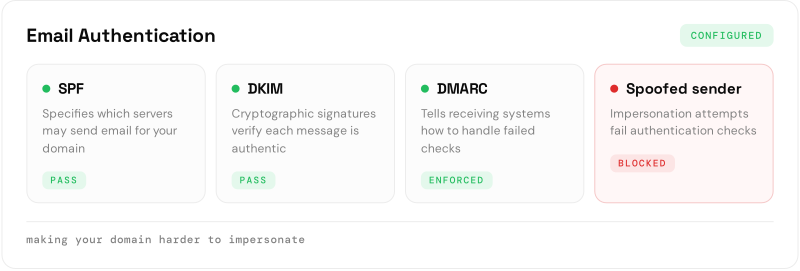
SPF specifies which servers are authorised to send email for your domain.
DKIM applies cryptographic signatures that allow receiving mail servers to verify authenticity.
DMARC builds on both technologies and tells receiving systems how to handle messages that fail authentication checks.
When properly configured, these controls make email spoofing significantly more difficult and should form part of every organisation’s security baseline.
Website cloning is rarely an isolated issue
For many organisations, discovering a cloned website is the first indication of a wider cyber security incident.
The most effective response follows a consistent pattern:
- Investigate quickly.
- Preserve evidence.
- Communicate carefully.
- Escalate where necessary.
- Work from verified facts rather than assumptions.
Whether the incident involves a cloned website, phishing campaign, compromised email account, or another form of impersonation, having an experienced technical partner can make the response more organised and more effective.
In summary
If you discover a cloned version of your website:
- Stay calm, but act promptly.
- Record the details and preserve evidence.
- Avoid interacting with the fraudulent site.
- Notify your technical team immediately.
- Warn customers if they may be at risk.
- Seek legal advice where appropriate.
- Begin the takedown and reporting process as early as possible.
Website cloning is an increasingly common tactic used by cyber criminals, but with a structured response and the right technical support, organisations can minimise disruption and protect both their reputation and their users.
Further resources
- National Cyber Security Centre (NCSC) – Official UK guidance on cyber security and incident response.
- NCSC advice for small and medium-sized organisations – Practical security guidance and free resources for UK businesses.